

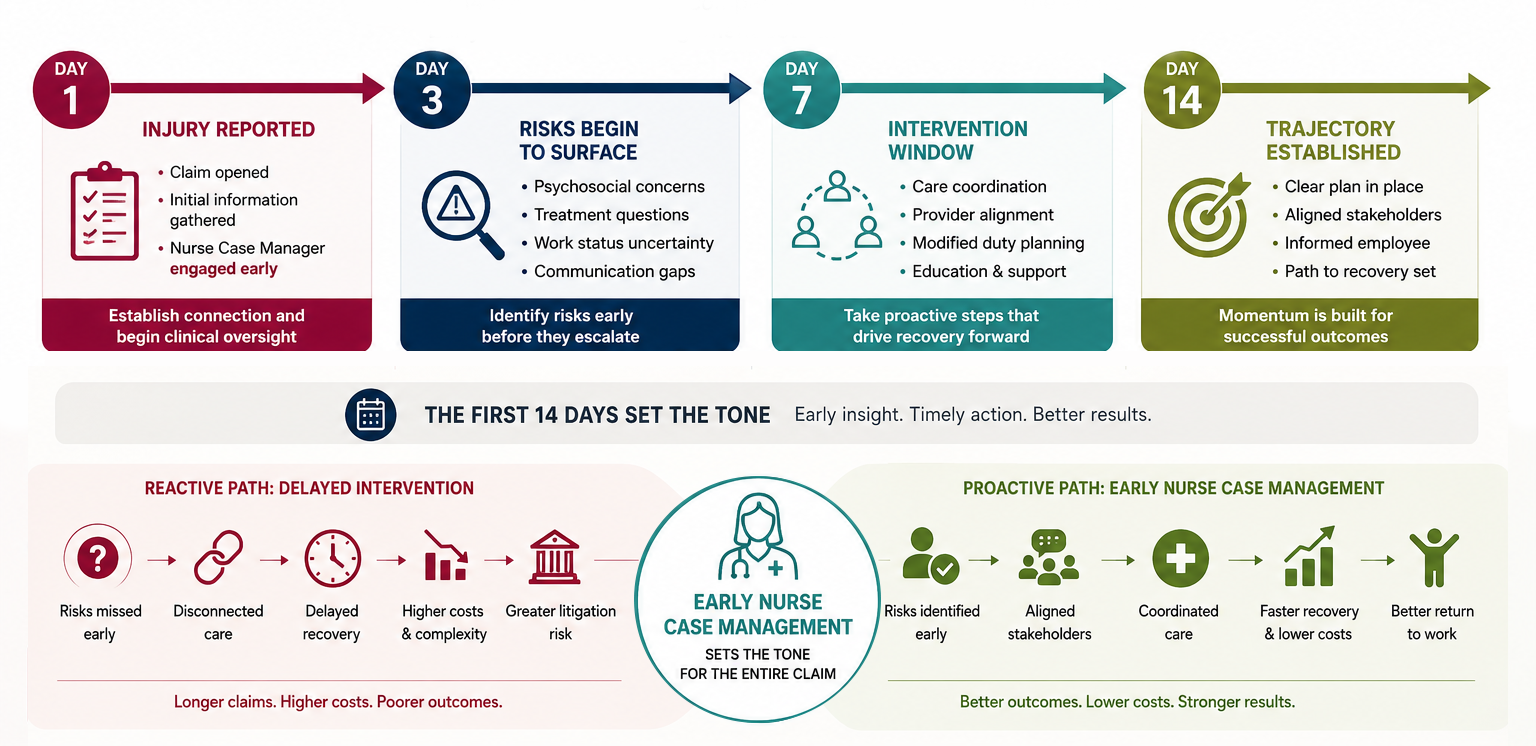
For workers’ compensation leaders, the early days of a claim often move quickly: intake, initial treatment, documentation, and coordination. But within that activity lies a critical window that can shape the entire life of the claim. The first 14 days are not just administrative, they are strategic.
This is the period where expectations are formed, care pathways are established, and potential risks begin to surface. Organizations that prioritize early nurse case management during this window consistently position themselves for better outcomes clinically, operationally, and financially.
Setting the Foundation Early
The trajectory of a claim is often determined before it ever shows signs of complexity. Early nurse case management introduces clinical oversight at a point when interventions are most effective and least disruptive.
During the first two weeks, nurse case managers assess more than the injury itself. They evaluate the claimant’s understanding of their condition, their access to care, and any immediate concerns that could affect recovery. Establishing this early connection builds trust and encourages engagement, two factors that are difficult to regain once a claim begins to drift.
Equally important, early involvement helps ensure that initial treatment aligns with evidence-based guidelines. This reduces the likelihood of unnecessary delays, inappropriate care, or fragmented communication between providers.
Identifying Risk Before It Escalates
Many of the factors that drive claim complexity—psychosocial concerns, workplace misalignment, or treatment inefficiencies—begin to emerge early, even if they are not immediately obvious.
A seasoned nurse case manager knows what to look for. Subtle indicators such as hesitation about returning to work, confusion about treatment plans, or gaps in communication can signal future delays. Addressing these issues within the first 14 days allows for targeted interventions before they compound into larger challenges.
For example, early identification of fear-avoidance behaviors can prompt timely education or behavioral health support. Recognizing workplace barriers can lead to proactive coordination with employers to develop modified duty options. These actions, taken early, often prevent the need for more intensive—and costly—interventions later.
Driving Alignment Across Stakeholders
One of the most valuable aspects of early nurse case management is its ability to align all parties involved in the claim. Claimants, providers, employers, and claims professionals each play a role, but without coordination, even well-intentioned efforts can become disjointed.
Nurse case managers serve as a central point of communication, ensuring that everyone is working toward the same recovery and return-to-work goals. Clear expectations are established early, reducing confusion and minimizing the risk of conflicting information.
For leadership teams, this alignment translates into greater predictability. When stakeholders are coordinated from the outset, claims are less likely to veer off course.
A Proactive Model That Pays Off
Waiting to introduce nurse case management until a claim becomes complex is a reactive approach—one that often limits the ability to influence outcomes. By contrast, early engagement reflects a proactive model that prioritizes prevention over correction.
The benefits are measurable: shorter claim durations, improved return-to-work rates, and more efficient use of medical resources. Just as importantly, it reinforces a culture of support and accountability that resonates with both employees and employers.
As you evaluate your program this May, consider how consistently nurse case management is integrated within the first 14 days. Are you leveraging that window to its full potential, or are opportunities being missed?
In workers’ compensation, early decisions carry long-term consequences. By setting the tone from day one, organizations can guide claims toward more positive, predictable outcomes—and avoid the complexities that come with delayed intervention.
Ready to strengthen your early-claim strategy?
Partner with ISYS Solutions, Inc. to embed experienced nurse case managers at the start of every claim. Our proactive approach helps you identify risks early, align stakeholders, and drive better outcomes from day one. Connect with our team to learn how we can support your organization.
Frequently Asked Questions
Why are the first 14 days important in workers’ compensation claims?
The first 14 days establish treatment direction, communication expectations, and early recovery planning, all of which influence claim outcomes and return-to-work timelines.
What is early nurse case management?
Early nurse case management introduces clinical oversight at the beginning of a workers’ compensation claim to coordinate care, identify risks, and support recovery progression.
How does early intervention reduce claim complexity?
Early intervention helps identify psychosocial barriers, treatment delays, workplace issues, and communication gaps before they escalate into prolonged or costly claims.
When should nurse case management begin?
Nurse case management is most effective when introduced as early as possible, ideally within the first 14 days of a claim.


No responses yet